The Diary in Your Dashboard: Reading Back What Your Car Has Been Telling Insurers
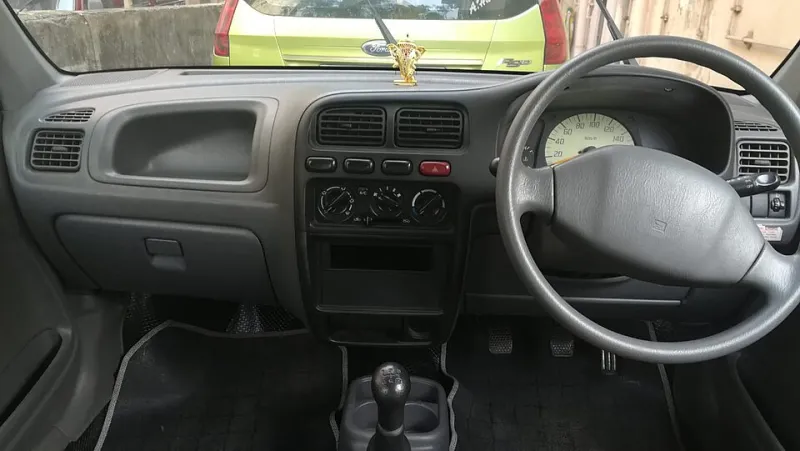
Photo: Vjdeep, CC BY 3.0, via Wikimedia Commons
A car used to be a fairly private place. You drove it, it wore out, and the only witness to your late-night shortcut was the hedge you clipped. That arrangement has changed. Today's vehicles arrive with an event data recorder, a manufacturer account, a permanently paired phone, a satellite navigation history and, quite often, an insurance product bolted on top that reports on you every time you touch the brake.
Most of this data is collected for sensible reasons. Some of it isn't collected for reasons anybody explained to you. Either way, you're entitled to see it, and this is a guide to doing exactly that before somebody else does.
Your car has been keeping notes
Start with what's actually in the vehicle. Since 2022, new car types sold here have had to carry an event data recorder, and since July 2024 the requirement has covered new registrations generally, mirroring the rules that came in across Europe. An EDR is not a dashcam. It's a loop of a few seconds either side of a collision, storing things like speed, throttle position, brake use, steering angle and whether seatbelts were worn. It overwrites itself constantly and is only frozen by a deployment or a significant impact.
Then there's everything the car does as a connected product. Emergency call systems have been standard for years. Manufacturer apps remember service bookings, remote lock commands and, on electric models, charging locations. The infotainment head unit keeps a list of paired phones and often their contact books. Satellite navigation retains destinations and previous routes. Keyless entry systems log timestamps of unlocks. Tyre pressure sensors and battery management systems generate continuous telemetry. None of it is designed to spy on you, and all of it is a description of your week.
What insurers genuinely get, and when
There are two very different situations here, and they get muddled constantly.
The first is a telematics policy, sometimes called black-box or smart-driver insurance. You sign up knowing that a device will be fitted or an app installed, and that driving data will be shared continuously. Those policies score you on speed relative to limits, harsh braking and acceleration, cornering, mileage and the time of day you drive. A good score trims the renewal; a poor one can push it up, and some policies reserve the right to cancel. It's a contract, and the data sharing is the price of the premium.
The second is an ordinary policy, where the insurer does not have a live feed from your car. That doesn't mean they'll never see the data. After a claim, they may ask you to consent to the EDR being downloaded, or ask for dashcam footage, or ask for your app's trip history. You can refuse. It will not make the claim go away, but it may make the conversation longer and more awkward, and it's worth knowing that refusing isn't the lever they'd like you to think it is.
The quiet growth area is usage-based pricing built on data you volunteered through a manufacturer's connected services package. If you already share mileage and location with the carmaker for a convenience feature, it's worth checking whether that data can be passed to a partner under the terms you agreed to.
Who else is holding a copy
This is where most people lose the thread, because the data isn't in one place. It's with the manufacturer's UK data team, the franchised dealer who serviced it, the leasing company if you don't own the car, the breakdown provider, the aftermarket tracker company, and the insurer. If it's a company car, add your employer, who may have a monitoring policy you've never read.
Making a subject access request that gets answered
A subject access request is free and has to be answered within one month, extendable by two if the request is complex. You don't need a form and you don't need a solicitor. You do need to be the person the data is about, and you may need to prove you're the registered keeper.
Send it in writing, email is fine, and be specific about the vehicle: registration, VIN if you have it, and the period you're asking about. For a manufacturer, something like this usually does the job:
Under Article 15 of the UK GDPR, please provide a copy of all personal data you hold relating to me and to the vehicle with registration [X], including connected service records, location and trip data, event data recorder information, app account activity and details of any third parties with whom this data has been shared.
Send the same thing to the dealer, the leasing firm if relevant, and your insurer if you've been on a telematics policy. Expect some of them to be quick and one of them to be bafflingly slow; that's normal. If a month passes with nothing, or you get a fob-off, that's an ICO complaint, and it's a genuinely effective one because it creates a paper trail.
One caveat worth stating plainly: some EDR reads need manufacturer equipment and authorised access, and a maker may say they can't extract it for you in raw form. They can still tell you what they hold and who they've given it to, which is often the more interesting answer.
Before you sell or hand back the keys
The most common leak isn't an insurer at all. It's a car sold on with somebody else's life still in the system. Do a proper clear-out: unpair every phone from the head unit, sign out of the manufacturer app and remove the vehicle from the account, delete stored destinations and home addresses from the navigation, clear the contacts list, and wipe any personal profiles tied to seats or keys. On a lease return, ask the leasing company in writing what happens to the connected data once the car goes back.
A short checklist
- Check whether you're on a telematics policy, an app-based one, or neither. Read the data clause you agreed to.
- Ask the manufacturer what connected services are active on your car and what they record.
- Request your data from every holder, not just the obvious one.
- Keep the responses. They're useful if a claim or a dispute turns up later.
- Wipe the infotainment and unlink accounts before selling.
- If you're in a company car, ask your employer for their monitoring policy in writing.
The dashboard has always told you how fast you were going. It's just that now it tells other people too, and it keeps the receipts.