Half-Hourly Confessions: What Your Smart Meter Quietly Reports About You
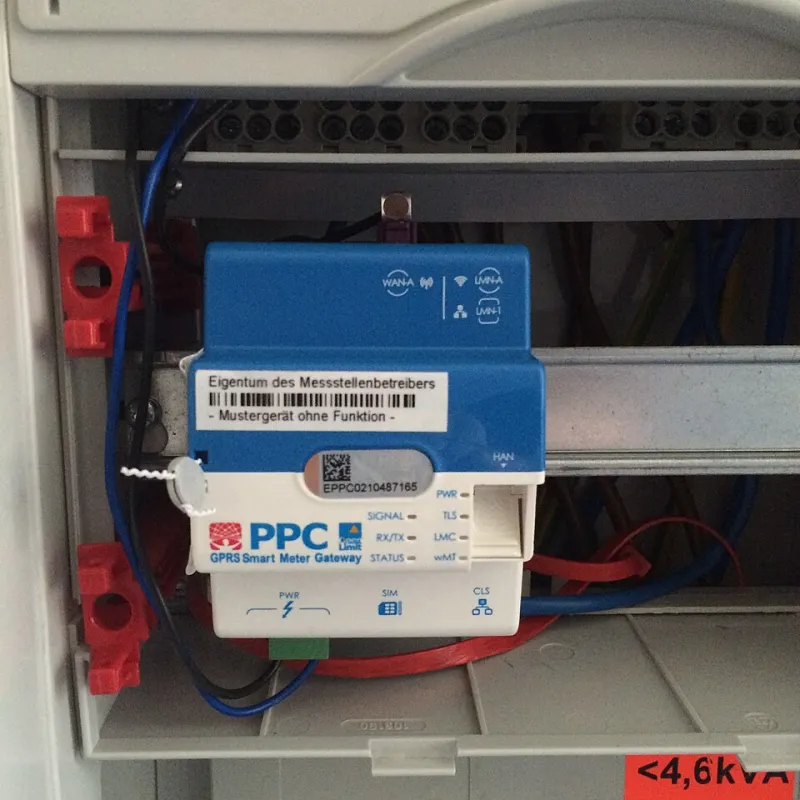
Photo: Pichiciago, CC BY-SA 4.0, via Wikimedia Commons
There's a small plastic box in your life that knows when you get up, when you go to bed, when you're on holiday and roughly how long you spend in the shower. It doesn't have a camera, a microphone or an app you can delete. It's your smart meter, and it has been quietly submitting reports about your household since the day it was fitted.
None of this is a scandal. Smart meters do a genuinely useful job, and nobody at your supplier is sitting in a call centre tutting at your kettle. But the data they produce is detailed, long-lived and more widely shared than most billpayers realise, and it's worth ten minutes of your attention.
What the meter actually writes down
A smart meter doesn't record a single monthly total. It logs your electricity consumption in half-hourly slices, timestamped, tied to your MPAN (the long number that identifies your supply point) and your address. Gas meters usually report either half-hourly or once a day, depending on how the installation was set up. Some meters also keep a record of voltage and power quality events, which is dull until it becomes a way of spotting a fault.
On its own, a half-hourly curve is just a shape. In practice, shapes are gossipy. A flat line through the middle of the day and a spike at 7pm says someone's home in the evening. A fortnight of near-zero readings says the house is empty. A big baseload that appears at 1am and vanishes at 6am suggests an immersion heater, a heat pump on a cheap overnight tariff, or an electric vehicle being charged. Repeated short bursts in the morning can point to a shower, an oven or a tumble dryer. Patterns of that kind can be inferred by anyone holding the interval data, without ever setting foot in your hall.
Who gets to see it
The list is shorter than the scariest headlines suggest, and longer than most people assume.
- Your supplier uses the data to bill you, and Ofgem's licence conditions limit what else it can do with it without your agreement. Half-hourly data shouldn't be used for marketing unless you've said yes, and you're entitled to choose how often your meter reports, usually half-hourly, daily or monthly.
- Your network operator sees consumption data for balancing the grid and for settlement, which is a legitimate use but not one you can switch off.
- The Data Communications Company (DCC) runs the national network that carries the readings. It's the postman, not the reader, but it does hold records, and it publishes a data guide setting out who can request what.
- Third parties such as energy-saving apps, comparison services and clever thermostat add-ons can only pull your readings with explicit consent, requested through your supplier or through the app itself. That consent is revocable, and most people never revisit it.
- Everyone else needs a legal basis: a court order, a production order in a criminal investigation, or similar. Energy data has turned up in prosecutions before now, because unusually high consumption is a fairly reliable signal of certain indoor horticulture.
How long it hangs around
This is the bit worth asking about directly. Suppliers generally hold your consumption history for the duration of your account and for a period afterwards, and switching supplier doesn't wipe the slate clean. The DCC keeps its own records on a defined retention schedule. Nobody is going to give you a neat universal number, because it depends on the supplier and the data type, so the honest answer is: ask, in writing, and make them put it in an email.
The awkward cases
If your energy is included in your rent, or the account is in a landlord's name, you probably aren't the account holder and you can't change the settings yourself. The readings still describe your life, though, which is an uncomfortable combination. Ask the landlord or letting agent who holds the account, and whether the reporting frequency can be reduced.
Shared houses are messier still. A single meter serves four people, so the data is a blur of everyone's habits, and the person named on the bill has control of the settings. Worth a conversation before someone fits a smart radiator valve that reports to a cloud service nobody's heard of.
A practical checklist
- Find out who the account holder is. No point arguing about settings if the bill is in someone else's name.
- Call your supplier and ask about data preferences. Use those words. Ask what frequency your meter reports at, and ask them to change it if you'd rather have daily or monthly.
- Ask what your half-hourly consent is currently set to, and whether it's being used for anything beyond billing and settlement.
- Audit third-party apps. Any energy app or tariff-comparison service with access to your readings should be one you still use. Revoke the rest.
- Ignore the in-home display as a privacy tool. It's a mirror, not a control. Changing what it shows changes nothing about what gets sent.
- Keep an eye on the calendar. Unusual absence is the single most revealing thing about meter data, so if you're away for a fortnight, that's already captured. A timer on a lamp doesn't fool a kWh curve.
- Use your rights. A subject access request to your supplier is free, must be answered within a month, and should get you your consumption history plus an explanation of who it's shared with. Something like: Please provide a copy of all personal data you hold about me and my supply point, including interval consumption data, consent records and details of any third parties with whom it has been shared.
- If something looks wrong, raise it with the supplier first, then the Information Commissioner's Office. The ICO won't ring your bell, but a complaint on file does move things.
None of this requires you to go off-grid or start reading meters by candlelight. It's just a case of knowing that the box under the stairs is a record-keeper, that the record has a shape, and that the shape says more about your week than your bill ever will.