Tap, Tap, Who's There? Taking Ownership of Your Contactless Travel Trail
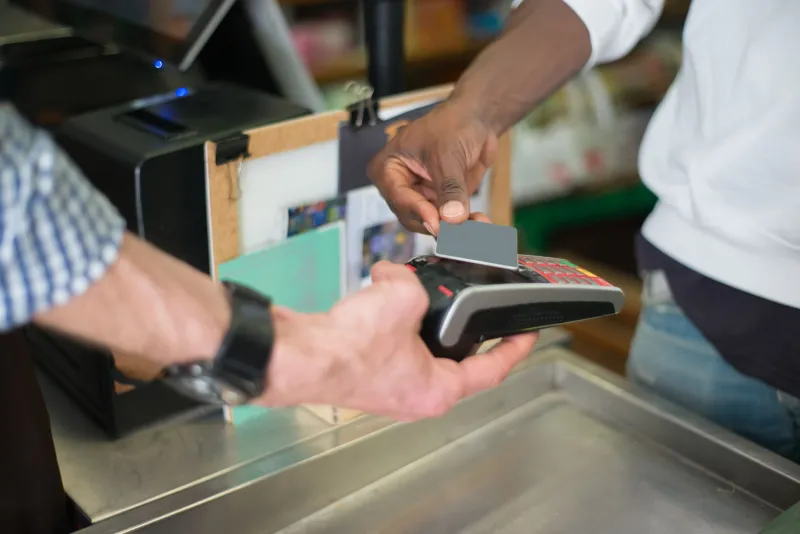
Somewhere in a server rack there's a decent approximation of your week. It starts with a tap on a yellow reader at 08:12, ends with a slightly guilty tap-out at 23:40, and then repeats — quietly, reliably — for as long as you keep paying for things by waving them at a machine.
Contactless ticketing is one of the genuinely good bits of UK infrastructure. Nobody misses scrabbling for coins on a bus. But every tap is also a timestamped location record, and unlike a bank statement it captures the dull in-between bits: which station you entered, which you left, which bus you took at lunchtime. What follows is a look at what that adds up to, how to get your hands on your own copy, and how to stop handing over quite so much of it.
What a tap actually writes down
A contactless tap generates a journey record: a card reference (usually tokenised rather than your full card number), an entry point, an exit point, a time, a fare, and the operator that processed it. Stack a few hundred of those together and the pattern does the introductions for you. Two taps a day between the same pair of stations, five days a week, is a home and a workplace — even with no name attached to the file.
Then the weekends fill in the rest. The station nearest your flat, the gym two stops along, the pub that only ever appears on a Friday. What you end up with is closer to a behavioural profile than a receipt.
Oyster and contactless aren't the same animal
Worth being precise here, because people tend to lump them together. A registered Oyster card is tied to an account carrying your name, email and address. Journey history is easy to pull — and equally easy for anyone with a lawful basis to request. An unregistered Oyster is nearer to cash: it holds a balance, not an identity. Contactless bank cards sit awkwardly in between. The transit authority sees a card reference and a token; your bank sees a merchant. Put those two halves together and the anonymity evaporates.
None of that is a scandal — it's simply how the system charges you the correct fare. But it does mean "it's only a card number" isn't the reassurance it sounds like.
Who ends up holding the pattern
Transport for London is the obvious custodian, and its privacy notice is unusually readable for this sort of document. It sets out what's collected, how long it's held, and when it gets shared — including with police, with fraud investigators, and with other public bodies where a legal basis exists. Retention periods for some categories run into years rather than weeks, so it's worth reading the published schedule rather than assuming last month's journeys have quietly evaporated.
Outside the capital the picture is patchier. Project Oval has been steadily extending contactless pay-as-you-go to more commuter stations, which means more operators collecting more journey records under their own retention rules. Add smartcard schemes, season ticket accounts, and the fact that most of us buy at least some tickets through a retailer with a login, and your travel history ends up scattered across a fair few organisations.
Getting your own copy
You have a right of access under UK GDPR, and transport bodies are well practised at these requests. The practical routes:
- TfL: there's a dedicated subject access request form on the TfL website. Have your card details to hand — for contactless they'll want the long number and expiry date, for Oyster the card number.
- Train operators and smartcard schemes: email the operator's data protection officer directly. Their privacy notice will name the contact.
- Retailers: if you buy tickets via an app or website, that account holds a purchase history separate from the barrier data.
- Your bank: a subject access request will surface the transaction side, which is handy for filling gaps.
Most requests should be answered within a month. Complex ones can be extended, but they have to explain why. If a request gets ignored or fobbed off, the Information Commissioner's Office is the escalation route.
Reading it without flinching
Expect a spreadsheet, not a story. Columns, codes, station abbreviations, fare values. The interesting part is the shape rather than any single row: how consistent your times are, how many unique locations appear, whether anything turns up you'd rather wasn't on file — a hospital, a clinic, a solicitor's office.
That last category deserves a moment's thought. Journey data is location data, and location data can imply health, religion, relationships, all sorts. It's one of the reasons the retention question matters far more than it first appears.
Shrinking the trail
You can't opt out of tap-and-go and still have a functioning commute, but you can be deliberate about it:
- Keep one card for travel and another for everything else. Don't tap your main current account card on the Tube and then use the same one at the pharmacy.
- Consider an unregistered Oyster for London pay-as-you-go. A small friction cost for a smaller identity footprint.
- Don't register a card "for convenience" unless you actually need it. Registration buys you lost-card refunds; it also builds a named profile.
- Scrutinise retailer accounts. "Save my details" is a data collection decision dressed up as a user-experience feature.
- Use cash where it still works. London buses are cashless, but plenty of regional services and station machines aren't.
- Re-read the settings each year. Operators revise privacy notices and nobody emails you about it.
The bottom line
Nobody is sitting in a room drawing lines between your taps. But the record exists, it's retained, and it can be shared under the right circumstances — and the only way to form a view on that is to look at your own file first. Request it. Read it. Then decide what you're comfortable handing over next month.